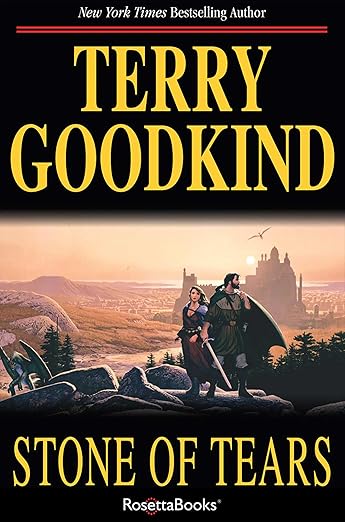
Stone of Tears — Terry Goodkind
FANTASY
6/19/20262 min read
Good intentions do not cancel consequences.
That is the lesson at the center of Stone of Tears, the second volume in Terry Goodkind's Sword of Truth series. It is also one of the most uncomfortable ideas in the series — because most of us carry our intentions like a shield. We mean well. We try. And somehow we believe that trying should protect us from what our choices actually produce.
Goodkind does not let that stand.
The second book picks up where Wizard's First Rule left off — with a victory that turns out to have cost more than anyone knew. The act that saved the world in the first book tore something fundamental. Something that now has to be repaired. Not because Richard was reckless. Not because he failed to think. Because consequences follow from choices regardless of whether the person making them had all the information they needed.
The world does not care about his intentions. It follows cause and effect with the same indifference it applies to everything.
Goodkind separates his two main characters in this book and sends them through different dangers alone. What each of them discovers — without the other, without support — is the quality of who they actually are when circumstances stop carrying them. Richard faces a system that has legitimate authority in its own terms and demands his compliance anyway. He refuses. Not cleanly. Not without cost. But rooted in the same insistence on seeing clearly that defined him in book one. Kahlan is left to make decisions for thousands of people with insufficient resources and no good options. What Goodkind shows, quietly, is what leadership looks like when the outcome is not guaranteed by the sincerity of the effort.
Both arcs are asking the same question: what does it mean to take responsibility under conditions you did not choose?
The wizard's second rule — the greatest harm can result from the best intentions — is not a permission slip for paralysis. It is not an argument that trying is useless. It is a demand for a harder kind of honesty. Own what your choices produce. Not just what you meant. What actually followed.
That is the most demanding form of responsibility there is. It is also the only honest one.
The full essay on Substack explores what the second rule means for the Struggle stage of the Lantern Path — and what Richard and Kahlan's separate arcs reveal about what it costs to act when the exits are blocked and the outcome is not guaranteed.
Read the full essay on Substack →
Stone of Tears is available at Bookshop.org* and Amazon.com*. Purchasing through these links supports Struggle Society at no extra cost to you.
This post contains affiliate links*.